
Liquid Silicone Rubber (LSR) Design Considerations for Medical Device Parts

In this sponsored technical blog post, Precision Associates, Inc. (PAI) shares key design considerations for liquid silicone rubber (LSR) medical device parts and how engineering teams can evaluate manufacturability, validation risk, and part performance earlier in development.
Liquid silicone rubber (LSR) has earned its place in medical device development. This is because it can be molded with excellent repeatability and fine detail while still delivering the durability and elastic recovery R&D engineers need in components that get handled, sterilized, compressed, flexed, and asked to behave the same way every time.
Still, LSR isn’t a shortcut. If the part isn’t designed for the realities of tooling, cure, and demolding, you can end up with tool changes, longer validation, or quality issues that were avoidable early on in the design stage.
That’s why we’re sharing key design considerations for medical device development – to help you improve first-pass manufacturability, reduce redesign risk, and avoid tooling rework later in the process.
Start With the Formulation, Not the Geometry
LSR is a two-part thermoset system, so it’s injected at room temperature into a heated mold before curing into its final state, with formulation and durometer influencing flow, cure behavior, shrink, and how the part releases. That processing behavior is fundamentally different from melted thermoplastics that solidify as they cool.
For medical device development, it’s important to align material selection with patient contact expectations and functional requirements. Silicone is widely used for its biocompatibility, flexibility, and durability, but grades differ in meaningful ways depending on whether the device is short or long-term implant.
If your application needs more than a standard grade, experienced molders can tune properties with additives, including chemical resistance, thermal performance, UV and weather resistance, translucence, conductivity, and a wide durometer range.
Designing for Implantable Use
If your silicone component will be implanted, design assumptions need to tighten. Implantable silicone is generally grouped into short-term use (typically up to 29 days) and long-term use (exceeding 29 days or permanent). Long-term grades are expected to tolerate prolonged exposure to tissue and fluids without degrading or triggering adverse reactions.
The key shift is that “good enough for assembly” often is not good enough for long-term implantation, because the implant environment punishes small weaknesses that might never show up in a benchtop fit-check or a short pilot run. Surface condition and cleanliness matter more than many teams expect, which is why it is important to avoid features that trap contamination, create hidden crevices, or force excessive handling during demolding and secondary operations.
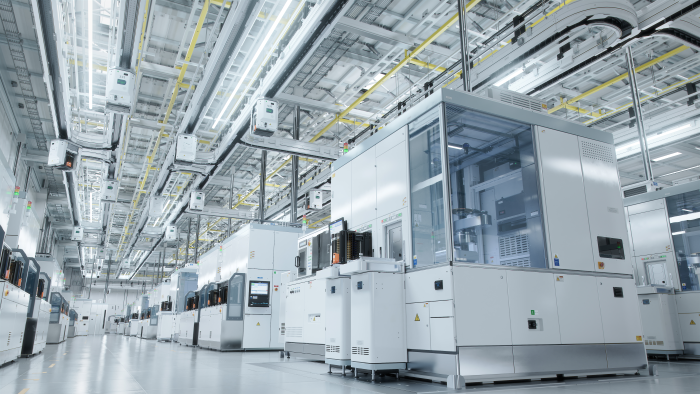
It is also worth thinking carefully about long-term mechanical stability for parts that see repeated compression, flex, or cyclic load, since stress concentrations tend to show up first at sharp corners, abrupt section changes, and thin hinges tied into thick anchors.
Material grade selection should also be tied to function. Cardiac, orthopedic, and neurostimulation use cases are not forgiving, and that reality should drive grade choice early, before locking in geometry and tolerance strategy. This is also where the manufacturing plan becomes part of the design, because cleanroom handling, validated processes, and inspection methodology influence what is realistic and what becomes risky.
Wall Thickness and Ribs: Keep Transitions Honest
LSR can fill thin sections, but the part still needs to flow and cure consistently. Walls around 0.010 inches or more are often achievable, depending on the geometry and how close thin areas sit to thicker regions.
Ribs should be sized with restraint. A good rule is 0.5 to 1.0 times the adjoining wall thickness. Oversized ribs stiffen the part and can create localized distortion, while undersized ribs may not support the load and can be inconsistent in fill.
The real issue isn’t thin versus thick. It’s abrupt transitions. Fast changes in section thickness create cure imbalance and dimensional variation, which are the kinds of problems that can be difficult to overcome once the tool is already cut.
Draft Angle: Don’t Fight the Tool
Draft supports predictable release and stable cycle time. One degree is common for LSR parts, although shallow geometry can sometimes run with zero draft. That brings up the question: is it worth the risk?
Draft decisions affect cosmetics, part distortion during release, and tool maintenance, so it is usually smarter to place draft where it is least disruptive than to remove it everywhere and hope the tool and process will tolerate it. If a seal feature cannot tolerate draft, that requirement should be treated as the exception rather than the design theme.
Undercuts: Possible, But Never Free
In LSR, undercuts can be molded, and removal can be manual or automated using cams. It’s common for manual removal to add handling and complicate validation, while automation increases mold cost and complexity.
If the undercut is only there to make assembly easier, it’s probably best to revisit the design. If it’s function-critical, it should be evaluated as an overall system because tooling, cycle time, labor, automation, and quality risk all count in the ultimate product investment.
Flash and Shrink: Design for the Hard Truths
LSR will flash if the tool has gaps, which can occur around 0.0002 inches or larger. While smart tooling design can reduce flash, geometry choices set the stage for how challenging the problem will be. If a critical sealing surface sits on a parting line, that choice introduces avoidable risk.
It’s important to remember that elastomers do not behave like rigid plastics. If your measurement plan ignores fixturing and compression, your data won’t be trustworthy. Considering downstream realities like sterilization methods, aggressive cleaners, and repeated compression cycles will expose weaker design choices that looked okay in early prototypes.
Parting Lines: Simplify Early, Save Cost Later
Many tooling problems start as simple design decisions, like moving a cosmetic surface or shifting a functional edge to give the toolmaker a clean split.
Complex parting lines can drive flash risk and tooling effort, while increasing inspection burden and cosmetic variability. You don’t always need a perfect parting line, but you do need a predictable one.
Ejection and Handling: Plan the Exit
Traditional ejector pins aren’t typical for LSR due to the material’s flash behavior, so tools are often designed so the part stays on one half of the mold when it opens. Parts may be removed manually, with air assist, or with robotics, depending on volume and geometry.
If the program is expected to scale, design with automation in mind early, because a part that releases consistently is easier to validate, inspect, and run at effective throughput – without introducing handling variability that turns into scrap, rework, or delay.
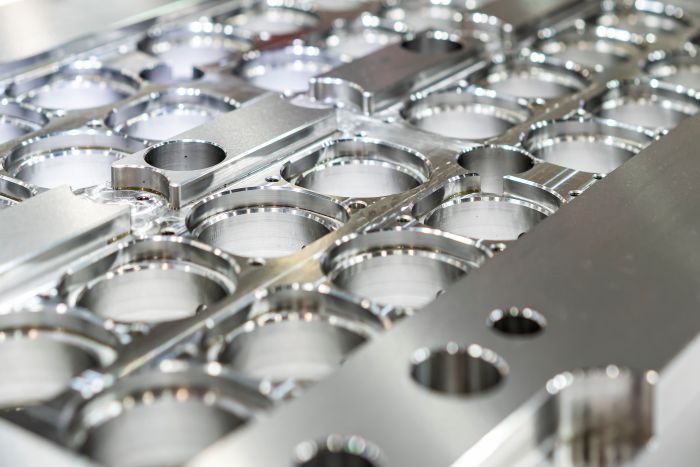
Tooling Strategy: Prototype Fast, Then Lock In
Prototype tools are often made from mild tool steel because they’re faster and have a lower cost. Production tools are commonly built from 420 pre-hardened stainless steel and may be warranted up to one million cycles. However, real life can be tough on tools, and cycle life will always depend on part design, maintenance discipline, and how aggressively the tool is run.
A practical path is simple:
- Prototype to prove geometry and function.
- Use what you learn to eliminate risk.
- Build production tooling for repeatability.
FAQs
What is LSR molding?
LSR molding injects a two-part silicone thermoset into a heated mold where it cures into the final part.
Can silicone be used for implantable medical components?
Yes. Implantable silicone is used in both short-term (up to 29 days) and long-term (over 29 days or permanent) applications, depending on grade and testing expectations.
How thin can LSR walls be?
Depending on geometry, walls around 0.010 inches or more are often achievable.
How much draft should an LSR part have?
One degree of draft is common, though shallow geometries can sometimes run with zero draft.
Can LSR parts include undercuts?
Yes. Undercuts can be molded and removed manually or through automated tooling actions like cams.
When does flash occur in LSR molding?
Flash can occur when mold gaps are around 0.0002 inches or larger, so parting line and tooling details matter.
What affects shrink in LSR parts?
Shrink varies with part design, LSR type, and durometer, so tolerances and inspection plans should reflect that reality.
About Precision Associates
Precision Associates, Inc. (PAI) is ISO 13485 and ISO 9001 certified and produces close-tolerance LSR molded medical device components, from quick-turn prototypes through high-volume production in a Class 7 cleanroom.
If you’re looking for a DFM review or need help selecting an implantable-grade silicone aligned to short-term or long-term use, submit an RFQ.
Their team proudly supports material selection, tooling strategy, and manufacturable part design out of Minneapolis, MN USA, with over 500 in-stock and quick-turn o-rings and seals available on Chamfr.