
 Share
Share
Revolutionizing Bifurcation Stent Delivery: Key Takeaways from a Live Procedure

In our latest live webinar, we offered an in-depth look at one of the most complex and underserved challenges in interventional cardiology: bifurcation stent delivery. Hosted from the state-of-the-art BioSim Innovations labs in Minneapolis, the session featured a live deployment of a bifurcated balloon and stent system, developed in collaboration with Interventional Cardiologist Dr. Al-Saadon and engineering support from Switchback Medical. With real-time imaging, component analysis, and deep clinical insights, the webinar delivered practical takeaways for engineers developing catheter-based delivery systems.
Want to see the full procedure in action? Sign up below to access the full recording →
Understanding Bifurcation Stenting: Clinical Context and Engineering Implications
Bifurcation lesions are present in up to 30% of percutaneous coronary interventions (PCIs). Yet, the current standard of care relies heavily on off-label use of traditional cylindrical stents and balloon technologies, leading to high procedural complexity, prolonged cath lab time, and suboptimal outcomes.
Today, clinicians often deploy a stent in the main vessel, jail the side branch, and then attempt to re-access it using a secondary balloon via the “kissing balloon technique.”
This method is associated with:
- Overexpansion of the proximal vessel
- Distortion or crushing of the metal stent
- Increased blood flow turbulence and risk of restenosis
- Complex catheter manipulations
This presented a unique challenge: designing bifurcation stent delivery systems that maintain stent integrity, streamline deployment, and adapt to patient-specific anatomy.
Featured Innovation: A New Approach to Bifurcated Stent Delivery Systems
Dr. Al-Saadon and Brady Hatcher (CEO of Switchback Medical) walked participants through the evolution of their novel bifurcated balloon catheter system and how it addresses the challenges of bifurcated stent delivery. What makes their system unique is a Y-shaped balloon profile designed to:
- Deliver two stents simultaneously
- Match natural vessel tapering (mother-daughter branching)
- Prevent jailing of the side branch
Many of the key components used in the device are available on Chamfr:
- Connectors & Fittings
- Hypodermic / Metal Tubing
- Polymer Tubing
- Liners & Multi-Lumen Tubes
- Marker Bands
- Balloons
- Laser Cut Tubing & Components
- Heat Shrink Tubing / Protective Sheaths
- Catheter Components
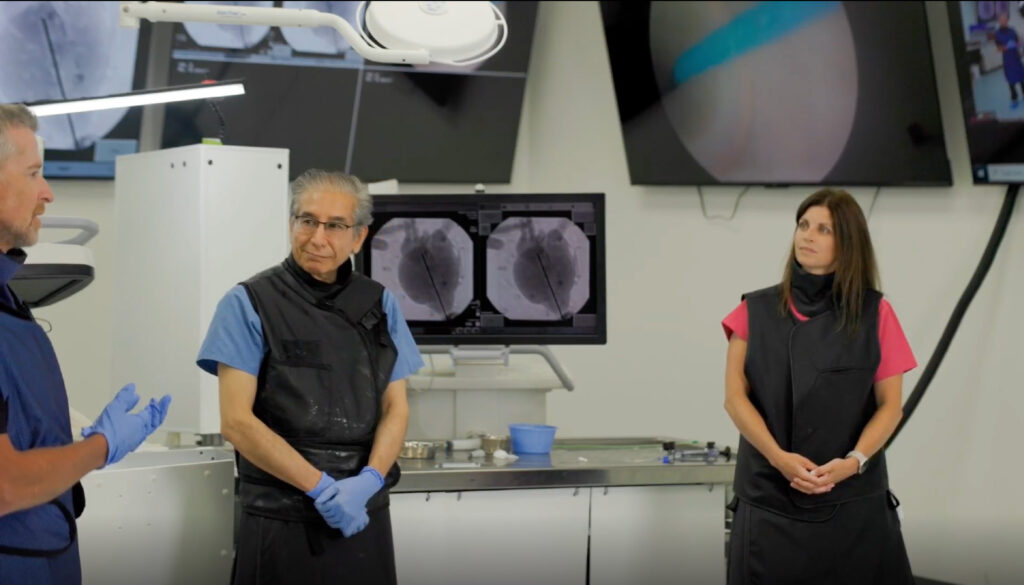
Engineering Insights: Component Selection & Assembly Challenges
The webinar highlighted key prototyping challenges and design principles critical to bifurcated catheter systems:
- Dual Wire Management & Passive Clocking
The system passively self-orients to align with the carina, eliminating side branch access issues caused by misalignment. - Tapered Balloon Geometry
Flow-informed tapering ensures wall apposition and avoids proximal overexpansion, following the “mother-daughter” rule: D1 = 0.68*(D2 + D3). - Low-Profile, High-Pressure Performance
Tested to 16 atm with full deployment at 6 atm, the system balances strength and safety through material selection and precise balloon folding.
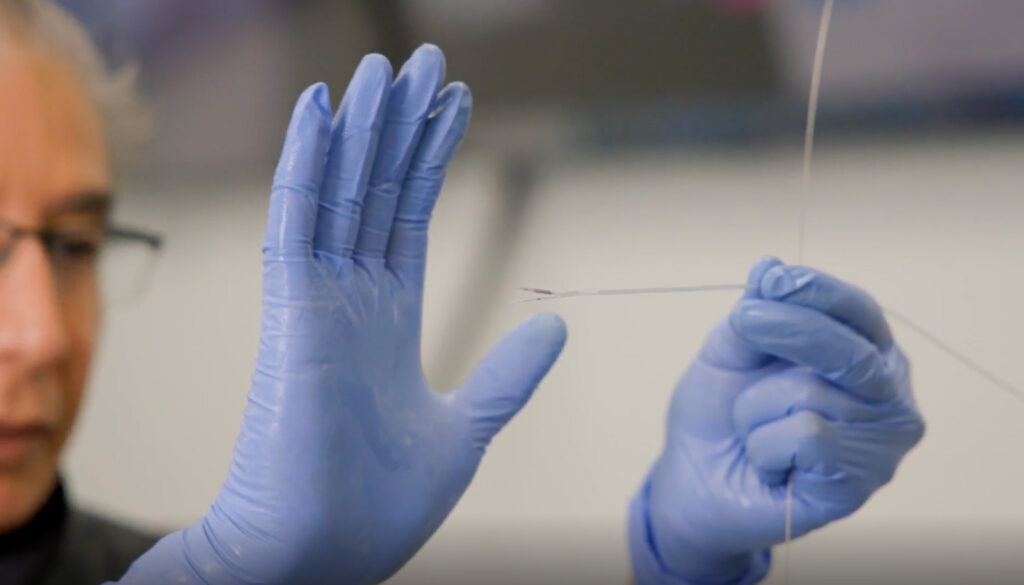
Clinical Feedback & Bench Testing: BioSim Innovations OR Suite
This webinar and much of the testing for the bifurcated balloon catheter system took place at the BioSim Innovations Lab. Hannah Gustafson from BioSim walked engineers through their use of ex vivo animal heart models with fully perfused pulsatile flow. The OR Suite setup allowed for:
- Real-time fluoro and marker band visualization
- Tactile feedback testing
- Onsite stent deployment and retrieval
- Quick iterations with rapid device reconfiguration
BioSim also supports use of calcified human vessels, custom anatomical replications from CT scans, and intravascular imaging to validate device performance under realistic procedural constraints.
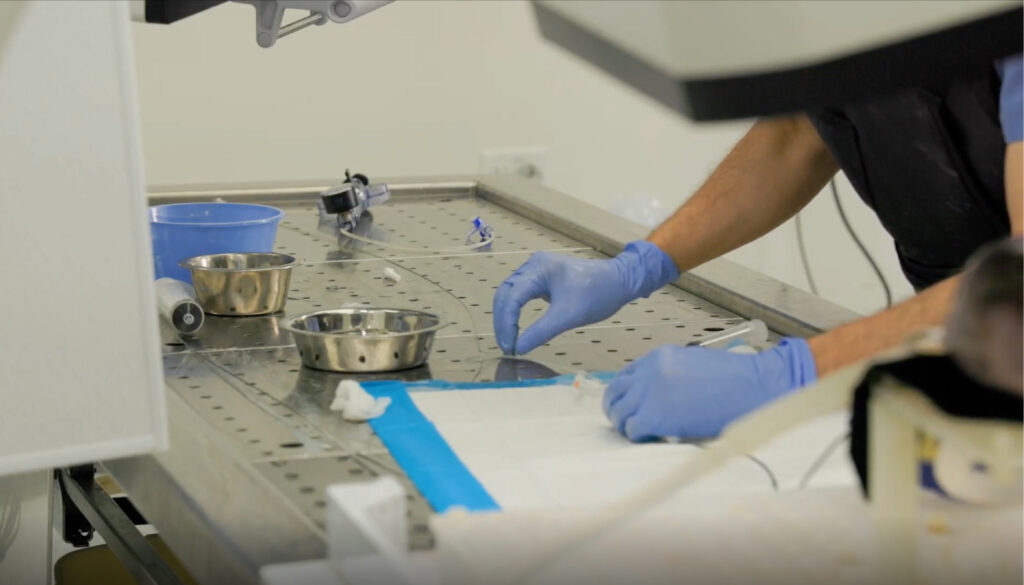
Results: Procedural Efficiency & Outcomes
By using the bifurcated system:
- Deployment time was reduced due to precise wire tracking and self-clocking
- Overexpansion was eliminated, maintaining proper lumen dimensions
- No side branch jailing occurred, preserving full perfusion
- Device was deployed, tested, and re-inflated using same hardware, showcasing durability and reusability
This approach provides a clinically relevant solution with direct implications for product design and development.
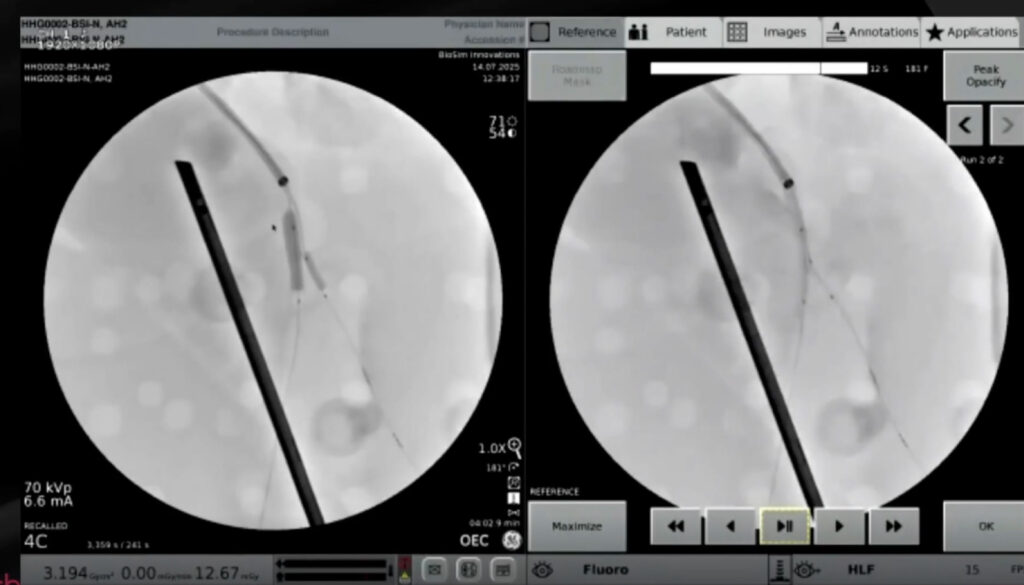
Final Thoughts on Birfurcation Stent Delivery Systems
The bifurcation balloon catheter system is a powerful example of how novel design, testing agility, and cross-functional collaboration can push the boundaries of catheter innovation.
Chamfr is here to support engineers at every stage:
- Thousands of off-the-shelf and ready to ship medical components, including balloons, hypotubes, marker bands, and luer fittings
- Quick access to partners like Switchback Medical and BioSim for prototyping and preclinical testing
- Hands-on demonstrations and expert-led educational content to accelerate learning
Join Chamfr’s community of R&D innovators and keep learning ways to accelerate your product development. Make sure to subscribe to our emails and follow us on LinkedIn for updates
Sign up below to watch the full recording.