

PTFE Alternatives in Medical Devices: What Engineers Must Validate Before Replacing PTFE

Why PTFE Replacement Is More Than a Material Swap
PTFE has become a frequent topic in material replacement discussions, largely driven by regulatory pressure around PFAS and evolving supply considerations. This conversation is worth having, and some serious engineering work is already underway that deserves recognition.
Serious work is already underway by several companies developing credible PTFE alternatives. These include Foster Corporation with its ProPell platform, Dynaflex Technologies with Everglide, dsm-firmenich with its UHMWPE solutions, Zeus Industrial Products with its PFX Flex™ Sub-Lite-Wall™ liner, and 3TG Tech with its 3TG PolyTech™ platform. These efforts reflect the kind of rigorous polymer science the medical device industry requires and should be part of any informed conversation about the path forward.
That said, PTFE remains the gold standard for inner catheter liners and is widely used in tearable introducer sheaths and heat shrink tubing, and for good reason. The majority of PTFE used in interventional devices is in the form of thin-wall catheter liners. That performance comes from how PTFE is processed, not just what it is made of. That is what makes replacement harder than it looks.
When engineers talk about PTFE’s lubricity, the conversation usually starts and ends with coefficient of friction. PTFE’s COF is the lowest of any polymer, but that number alone does not explain why PTFE performs the way it does in catheter liner applications. A coefficient of friction measured on a flat compression-molded specimen does not capture the processing-dependent behaviors that make PTFE irreplaceable in thin-wall liner applications.
That is precisely why selecting a PTFE alternative based on COF data alone is an incomplete and potentially misleading approach.
What Makes Expanded PTFE (ePTFE) Difficult to Replace?
The conversation becomes more complex when expanded PTFE is considered.
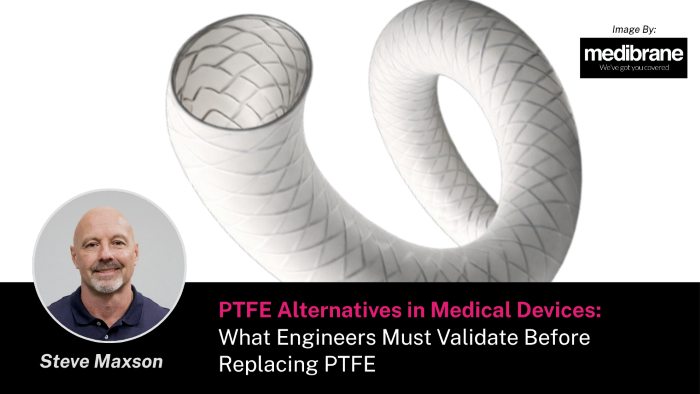
ePTFE is produced by mechanically expanding PTFE under controlled conditions to create a microporous node-and-fibril structure. The spacing between nodes, along with porosity and density, can be tuned through advanced extrusion and orientation techniques. This allows for highly customizable combinations of strength, flexibility, and permeability.
Producing high-performance thin-wall ePTFE tubing requires substantial manufacturing expertise. Direct extrusion has practical limits on minimum wall thickness and microstructure consistency. As a result, many advanced thin-wall products are made by laying up thin extruded membranes and sintering them into tubular form. This approach enables ultra-thin walls (down to approximately 0.002 inches) with better control over properties, but it demands deep process knowledge in both membrane manufacturing and tube forming. Biaxial orientation can further enhance performance by creating a more tortuous pore path that reduces permeability while maintaining mechanical integrity.
Real-world applications demonstrate the critical role of processing expertise in ePTFE performance. Large-diameter ePTFE capsules are used in transcatheter mitral valve replacement (TMVR) systems to house and protect compressed bioprosthetic valves during transfemoral delivery. These capsules often exceed 30 French in diameter and must deliver very low friction, thin-wall construction, and high reliability under significant mechanical stress.
Similarly, endovascular aortic grafts rely on multilayer ePTFE constructions engineered for conformability and long-term sealing performance. Each of these applications reflects extensive process development tailored to demanding clinical requirements.
These processing-dependent characteristics are what make high-performance ePTFE particularly valuable and difficult to replace. For example, next-generation endovascular stent grafts rely on multilayer ePTFE constructions that must simultaneously deliver conformability, low profile, and long-term sealing performance. These outcomes depend on precise control of the expansion and sintering processes.
The Electrospinning Dimension
PTFE can also be processed through electrospinning to produce non-woven nanofibrous membranes with multidirectional mechanical properties.
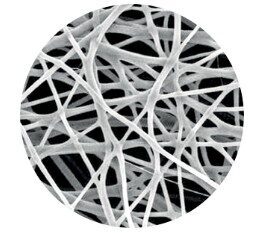
This method enables the creation of thin, highly conformable membranes with tunable porosity and mechanical performance.
Producing consistent, high-quality electrospun PTFE membranes requires specialized process control, including precise management of fiber diameter, membrane thickness, and sintering conditions.
These membranes are well-suited for encapsulating implantable stents and scaffolds. In covered stent applications, electrospun PTFE has demonstrated strong barrier performance, with some constructions showing impermeability under high pressure differentials while maintaining patency.
As with other forms of PTFE, these results depend on deep process expertise rather than the material alone.
PTFE Coatings Create a Separate Validation Challenge
PTFE coatings remain in widespread commercial use across many high-performance medical devices, particularly on guidewires, pull wires, stylets, hypotubes, and process mandrels. In these applications, performance depends on micron-level coating uniformity, strong adhesion, resistance to delamination, and consistent lubricity under demanding conditions.
Achieving these properties requires specialized coating processes, including precise masking, fixturing, and controlled high-temperature curing. These capabilities demand significant process expertise and equipment investment. While hydrophilic coatings have gained adoption in some guidewire applications, replacing PTFE coatings in more demanding areas, such as neurovascular, structural heart, and long-term implantable devices, presents distinct validation challenges related to long-term reliability under mechanical and biological stress.
As with other PTFE forms, effective coating performance is closely tied to processing expertise rather than the material alone.
Performance Requirements Any PTFE Alternative Must Meet
For any alternative to be considered a true replacement in catheter liner and sheath applications, it must answer the following questions:
1. Can it be consistently extruded at the thin wall thicknesses (0.00075–0.0015”) typically required for inner liners?
2. Does it develop reduced friction, improved toughness, and increased resistance to scraping and skiving when longitudinally stretched after extrusion, a process that also enables very thin wall thicknesses down to 0.0005 to 0.00075” while maintaining high tensile strength?
3. Can it be solution-cast or film-cast to reliably produce ultra-thin liners down to 0.0005” wall thickness?
4. Does it exhibit cold flow behavior at room temperature? This property makes PTFE effectively soft and compliant in use, despite a listed durometer of approximately 53D.
5. Can it replicate the “orange peel” surface topography created by PTFE’s paste extrusion process, a surface characteristic that results from fine powder particle size and directly contributes to low friction performance?
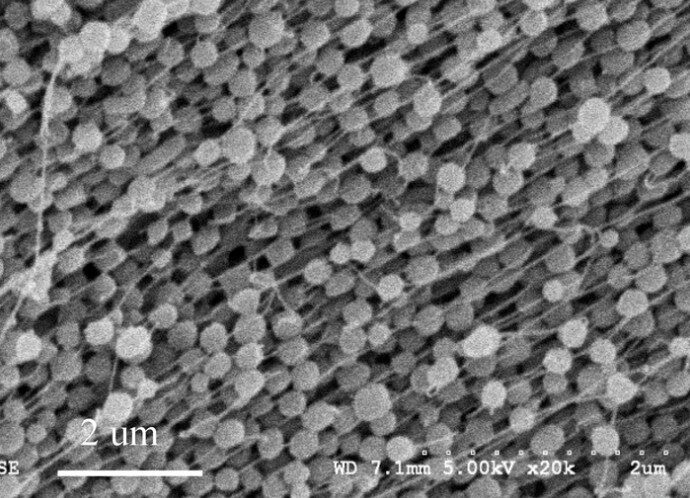
6. Does it inherently develop longitudinal molecular orientation during paste extrusion that allows introducer sheaths to tear cleanly and reliably along their length without skiving or score lines?
7. Can it be manufactured at these geometries with the lot-to-lot consistency that medical device production demands?
These are not obstacles designed to protect the status quo. They are the functional requirements that patients and clinicians depend on.
The Bottom Line: PTFE Replacement Requires Application-Specific Validation
The legitimate alternatives being developed by serious polymer science are working toward answers to exactly these questions. That work takes time, investment, and rigorous application-specific validation. The medical device industry should support that process while being clear-eyed that a material substitution list is not the same as a validated replacement.
Replacing PTFE where they truly matter will require processing expertise and application-specific validation, not just material availability. The bar is high because the applications demand it.
FAQs: PTFE Alternatives in Medical Devices
What are PTFE alternatives in medical devices?
PTFE alternatives are materials or coating technologies designed to replace PTFE in specific medical device applications, such as catheter liners, introducer sheaths, guidewire coatings, membranes, heat shrink tubing, or implantable components.
Are PFAS-free materials drop-in replacements for PTFE catheter liners?
In most cases, no. PFAS-free or non-PTFE materials must be validated against the functional requirements of the specific device, including wall thickness, lubricity, compliance, surface behavior, bonding, sterilization compatibility, and process repeatability.
Why is ePTFE hard to replace?
ePTFE is difficult to replace because its performance comes from specialized processes that create controlled microporous structures. These structures contribute to ePTFE’s porosity, compliance, strength, permeability, and biological performance.
What should engineers validate before replacing PTFE?
Engineers should validate thin-wall processing, friction performance, cold flow and compliance, surface morphology, mechanical toughness, tear behavior, coating adhesion, sterilization compatibility, aging performance, and lot-to-lot consistency.