

21 Biomerics Polyurethane Raw Materials Now on Chamfr for Catheter & Device Development

A polyurethane that worked well in one device may not be the best fit for the next.
Chemistry, Shore hardness, processing method, and how the finished component will be used all shape the final material decision.
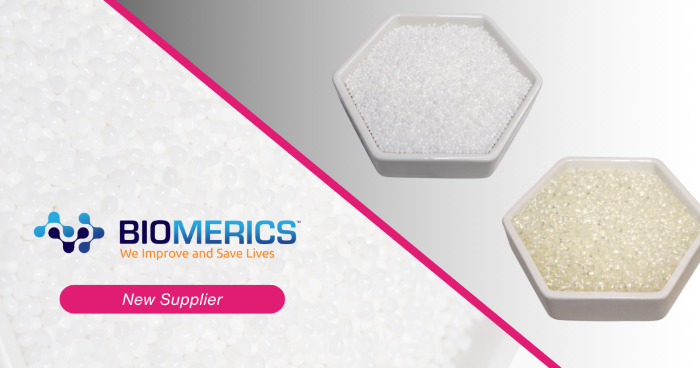
Now, engineers have 21 in-stock, medical-grade polyurethane raw material options from Biomerics across Quadraflex™, Quadrathane™, and Quadrasil™ so they can easily test new formulations in small quantities.
Materials for extrusion, injection molding, and solution processing are now available for catheter, vascular access, dialysis, balloon, coating, and other medical device applications, all shipping in just 1–2 business days.
Medical-Grade Polyurethane Options Ready for Early Evaluation
“Medical-grade polyurethane” covers a lot of ground.
The 21 options from Biomerics span aromatic and aliphatic chemistries, polyether and polycarbonate TPUs, polycarbonate-polysiloxane materials, Shore A and Shore D hardnesses, natural and BaSO₄-filled grades, and multiple processing methods.
That range gives engineers a more practical way to approach material selection early in development.
Engineers can narrow the options based on what they’re making, how the material will be processed, the Shore hardness they need, and unique application requirements, helping point them to the material family best fit to their needs.
Quadraflex™ TPU for Catheter, Balloon & Molded Components
Quadraflex offers the broadest range on Chamfr, with 13 medical-grade polyether TPU grades across aromatic and aliphatic chemistries.
The aromatic ARE and AREX materials support extrusion and injection molding and are commonly used across venous access, urology, hemodialysis, respiratory, fluid-management, balloon, and minimally invasive surgical applications.
Quadraflex ALE uses an aliphatic polyether chemistry and adds elasticity, non-yellowing behavior, and softening at body temperature.
These options also cover a wide hardness range, from softer Shore A grades through Shore D. Two ALE grades contain 20% barium sulfate, and a solution-grade ALE 91A option supports solution processing.
That makes Quadraflex a practical starting point for catheter tubing, balloons, molded parts, and other flexible components where engineers want room to evaluate chemistry and hardness.
Quadrathane™ for Long-Term Body-Contact Applications
Quadrathane brings polycarbonate-based TPU into the mix for devices that require chemical resistance and oxidative stability over extended body contact.
The six options include aromatic polycarbonate TPU across Shore A and Shore D hardnesses, an aliphatic polycarbonate 55D grade with 20% BaSO₄, and two solution-processing versions of the aromatic material.
Quadrathane ARC pairs chemical resistance and oxidative stability with hemocompatibility and natural clarity for long-term body-implantable applications.
The aliphatic Quadrathane ALC grade adds non-yellowing behavior, hemocompatibility, and softening in the body for long-term body-contact applications.
Across the family, applications include chronic indwelling and dialysis catheters, drainage and feeding catheters, pacemaker leads, coatings, interventional devices, and orthopedic applications.
Quadrasil™ for Blood-Contacting Devices & Solution-Processed Coatings
Quadrasil gives engineers a different material platform for long-term blood-contacting devices and coatings.
The two Quadrasil ARCS options on Chamfr are aromatic polycarbonate polyurethane-polysiloxane copolymers available in 70 Shore A and 80 Shore A. Both are designed for solution processing and are soluble in THF, DMF, and DMAc.
The material combines hemocompatibility, chemical resistance, and fouling resistance for long-term blood-contacting and body-implantable applications.
That makes Quadrasil especially relevant for solution-processed coatings and blood-contacting components that need something beyond a standard polyether or polycarbonate TPU.
Typical applications include chronic indwelling catheters, extracorporeal life support cannulae, and coatings, including sensor coatings.
Which Biomerics Polyurethane Family Fits Your Application?
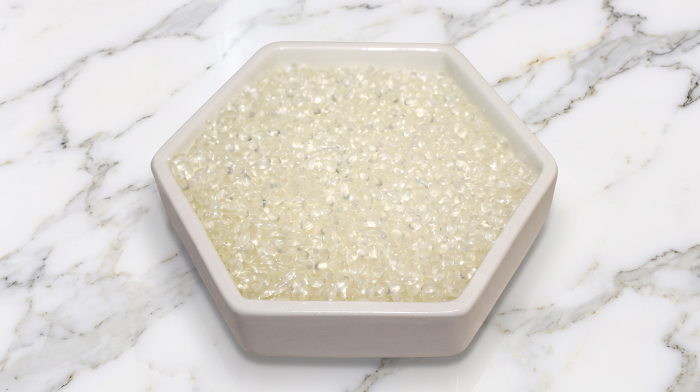
The three material families solve different problems, so the best starting point depends on what you’re building and what the material needs to accomplish.
Start with:
- Quadraflex for catheter tubing, balloons, molded components, vascular-access devices, dialysis components, and other applications where a broad range of polyether TPU chemistries and hardnesses gives you room to test.
- Quadrathane for chronic indwelling catheters, dialysis catheters, pacemaker leads, coatings, and other longer-term body-contact applications that call for polycarbonate TPU, chemical resistance, and oxidative stability.
- Quadrasil for long-term blood-contacting components, chronic catheters, extracorporeal cannulae, and solution-processed coatings where hemocompatibility and fouling resistance are critical.
Once the family is narrowed down, the next step is choosing the grade: Shore hardness, aromatic vs. aliphatic chemistry, processing method, and filled vs. unfilled options can all help refine that decision.
With 21 in-stock options, and more Biomerics products coming soon, engineers can get raw materials in hand faster, evaluate them sooner, and narrow down the right material without committing to a custom formulation.
Explore all Biomerics polyurethanes on Chamfr →
If the available grades don’t get you to where you need to go, bring those learnings into a custom material discussion with Biomerics to explore compounding, colorants, radiopacifiers, and other additives tailored to your application.