

Advantages of Laser Cut Hypotubes in Interventional Devices

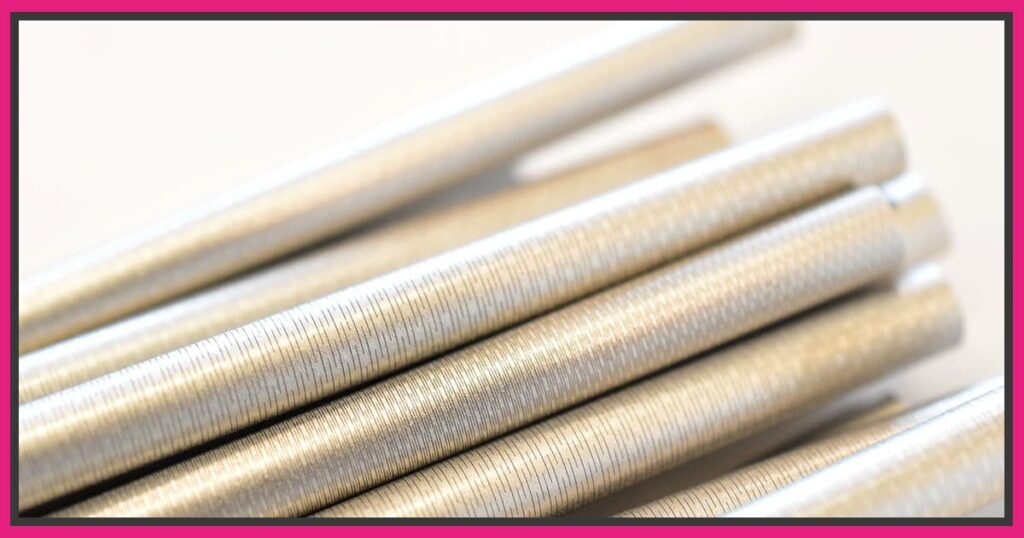
Create a Thinner, Higher-Performance Medical Device Using a Laser Cut Hypotube
Laser cut hypotubes help MedTech teams tune catheter shaft flexibility, torque response, pushability, trackability, and kink resistance through precise cut patterns in a thin-walled metal tube. For interventional devices, this can support thinner, more controlled shaft architectures while reducing reliance on multiple reinforcement layers or bonded transitions.
Many interventional catheter designs use a braided shaft construction, often built through a reflow process with a PTFE liner and Pebax outer jacket.
Yet in recent years, laser cutting advancements have created new options for catheter shaft reinforcement. Engineers can now use laser cut hypotubes to bring thinner, higher-performing medical devices to market while tuning shaft behavior through precise cut geometry.
Laser cut hypotubes are thin-walled metal tubes machined with laser technology. They offer dimensional accuracy, structural integrity, and customizable cut patterns that can influence flexibility, torque response, pushability, trackability, and kink resistance.
Here are some of the distinct advantages of laser cut hypotubes over braiding and coiling:
Design Flexibility
Laser cut hypotubes offer unprecedented design adaptability, allowing you to incorporate any number of patterns into a single monolithic part. This helps engineers create targeted flexibility zones without relying only on jacket durometer changes or multiple bonded shaft segments.
Trackability and Pushability
These tubes ensure smooth maneuverability, which allows for precise access to the intended treatment area. Pattern selection can help balance flexibility with column strength so the catheter can navigate tortuous anatomy while still advancing effectively.
Kink Resistance and Lumen Integrity
They exhibit outstanding kink resistance, maintaining the catheter’s structural integrity even in complex and tortuous anatomies. This is especially important when the shaft needs to bend without collapsing the working lumen.
Controlled Torque Transmission
Precisely created patterns enable 1:1 torque transmission, transmitting the rotational force to the catheter’s distal end. This can help improve control when physicians need rotational response during navigation or positioning.
Streamlined Manufacturing Process
Laser cut hypotubes allow engineers to dictate the catheter’s flex profile in the reinforcement layer, reducing the need for many different durometer jackets and the number of bonds required to construct a finished catheter.
How Cut Patterns Influence Finished Catheter Behavior
Overall, laser cut hypotube design should not be evaluated in isolation. The cut pattern is only one part of the finished catheter architecture, and its performance can be influenced by the surrounding liner, jacket material, bonding strategy, reflow conditions, and distal flexibility requirements.
For example, a highly flexible laser cut pattern might behave differently once it is combined with a liner, polymer jacket, or reflow process. That’s why it’s important to consider not only the cut pattern itself, but also how the full shaft construction will behave after assembly.
Dive deeper in the technical discussion with Symmetry Laser and Dynaflex Technologies, When Metal Meets Polymer: Rethinking Catheter Design with Laser Cut Hypotube Reinforcement.
Prototype Faster with Ready-to-Ship Laser Cut Hypotubes
For teams working in early-stage interventional device development, Chamfr makes it easier to get laser cut hypotubes in hand faster. Browse ready-to-ship laser cut hypotubes, or read Symmetry Laser’s full blog post for additional technical context.
As you move toward design freeze, submit a custom RFQ for additional sizes, materials, and cut patterns.
FAQs: Laser Cut Hypotubes
What are laser cut hypotubes?
Laser cut hypotubes are thin-walled metal tubes that are machined with precise cut patterns. In interventional devices, these patterns can help engineers tune flexibility, torque response, pushability, trackability, and kink resistance.
Why are laser cut hypotubes used in interventional devices?
Laser cut hypotubes are used in interventional devices because they can support thinner, more controlled catheter shaft designs while helping maintain strength, lumen integrity, and mechanical response through tortuous anatomy.
How do laser cut hypotubes compare to braided catheter shafts?
Braided shafts use wire reinforcement within a polymer construction, while laser cut hypotubes use a patterned metal tube to create controlled flexibility and torque response. The right choice depends on the device architecture, target profile, flexibility requirements, and manufacturing approach.
Where can I find laser cut hypotubes for prototyping?
Chamfr offers ready-to-ship laser cut hypotubes for early-stage prototyping, with RFQ options available for custom sizes, materials, or cut patterns.