

Electromagnetic Sensors: New Additions from TT Electronics

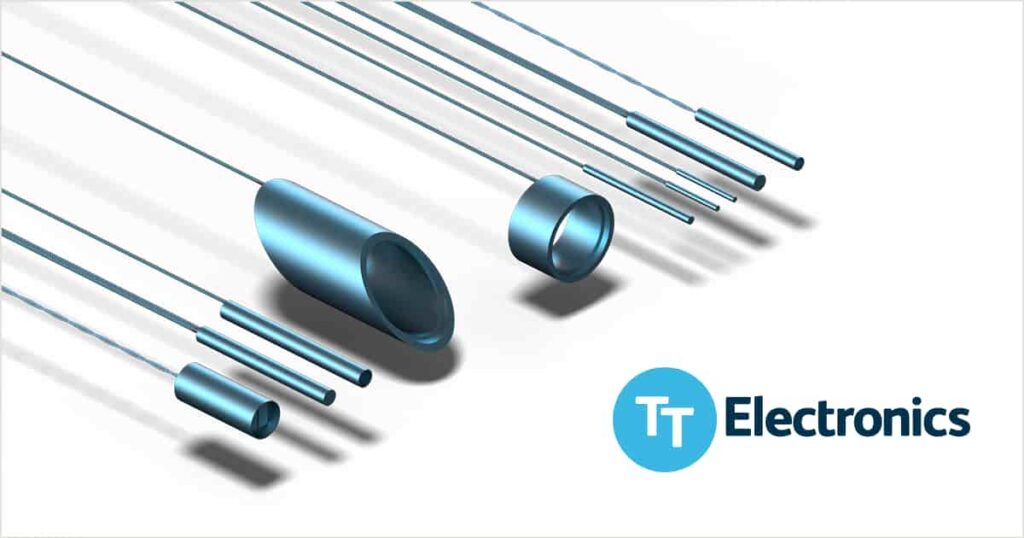
Electromagnetic sensors play a critical role in medical devices, enabling precise measurements and reliable performance in key applications. The addition of 12 new SKUs from our newest supplier, TT Electronics, significantly expands our sensor offerings—doubling the variety available for your medical device product development projects.
Why Electromagnetic Sensors Matter and How They Enhance Medical Devices
An electromagnetic sensor enables accurate detection of magnetic fields and ensuring precise functionality. From motion tracking to diagnostic imaging, they help power critical applications in the medical field. There are two types:
- Solid Core Sensors: Use ferromagnetic materials (e.g., iron or ferrite) to concentrate and amplify magnetic fields, enhancing sensitivity and signal detection. While they are larger in size and tend to have a slower response time, these sensors offer higher inductance and lower energy losses, making them ideal for diagnostic imaging and wearable magnetometers.
- Air Core Sensors: With a non-magnetic core (typically air or vacuum), these sensors generate weaker magnetic fields but offer faster response times and are less susceptible to saturation. While offering lower sensitivity compared to solid core sensors, they excel in high-frequency applications and are ideal for wearable devices and surgical navigation tools.
TT Electronics offers both types of electromagnetic sensors, each designed to meet specific medical device needs. By carefully matching the sensor type to the application requirements, you can ensure precision and reliable performance, optimizing both device functionality and patient outcomes across a wide range of applications.
Twisted Pair with Flying Leads Connections
Twisted Pair with Flying Leads offers flexibility and reliability in sensor connections, ensuring precise signal transmission and seamless integration across a variety of medical applications. TT Electronics’ sensors are available with this connection configuration.
- Twisted Pair: This configuration consists of two insulated wires twisted together in a helical fashion. This setup reduces electromagnetic interference (EMI), which is crucial in noisy hospital environments, ensuring signal clarity and reliable transmission for precise measurements.
- Flying Leads: Flying leads refer to the bare wire ends that extend from the sensor, without connectors attached. This design provides flexibility for users, allowing them to terminate the wires according to specific requirements—whether attaching a custom connector, soldering, or connecting to terminal blocks.
- Benefits of Twisted Pair with Flying Leads:
- Signal Clarity: The twisted pair configuration ensures accurate signal transmission, essential for precise medical measurements.
- Versatility: Flying leads provide customization for various medical systems, such as diagnostic devices, monitoring equipment, or imaging systems, making integration seamless.
- Noise Resistance: The twisted pair reduces EMI, increasing the sensor’s reliability in high-noise environments like hospitals, where multiple devices are in operation.
Key Features of TT Electronics’ Electromagnetic Sensor
These new sensors are designed to meet the diverse needs of medical device engineers.
Here are the key features that set them apart:
- Size Range: From 0.30 mm to 4.36 mm ODs and 2.5 mm
- Lengths: 2.5 mm to 9.7 mm lengths
- Core Material: Solid and air core
- Connection: Twisted Pair with Flying Leads
- Applications: Imaging systems, wearable devices, surgical navigation tools
Sensors on Chamfr: Expanded Selection for Your Medical Devices
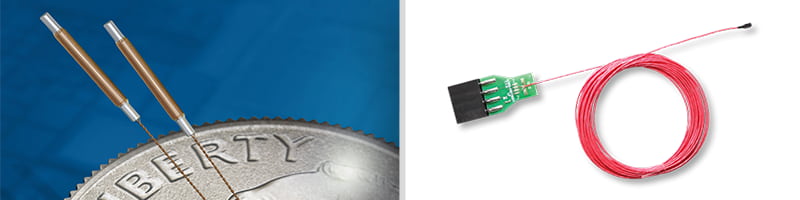
With 12 new SKUs from TT Electronics, Chamfr now offers a broader selection of sensors, helping you streamline your medical device development. Whether you’re looking for solid core sensors for high sensitivity or air core sensors for faster response times or CMOS sensors for high-resolution imaging, our expanded range ensures you have the right components to meet your project needs.