

How to Specify Coated Wire Around Your Application


In this sponsored technical blog post, Applied Plastics explores how application-specific coated-wire requirements influence component selection, coating performance, and validation for mandrels, core wires, and pull wires in interventional catheters.
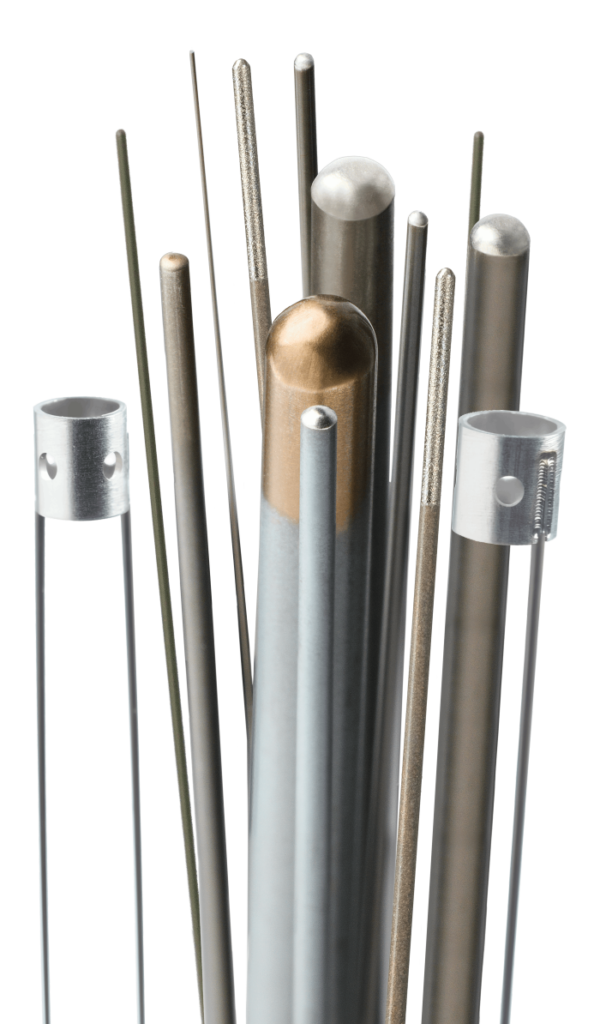
Mandrels, core wires, and pull wires can look remarkably similar on a specification sheet. Each may begin with stainless steel or other metal substrate, require tight dimensional control, and use a low-friction coating. Yet within an interventional catheter, these components perform fundamentally different jobs.
A mandrel supports manufacturing and is removed from the finished device. A core wire contributes to device structure and mechanical response. A pull wire transmits force repeatedly to steer or deflect a catheter.
Those differences matter when specifying coated wire.
Material, diameter, length, and coating are important, but they do not fully define how a wire needs to perform. A more complete specification starts with the component’s function and considers how it will move, what it will contact, the environment it will experience, and how its performance will ultimately be validated.
Overlooking these differences can introduce manufacturing variability, inconsistent mechanical performance, or validation challenges.
Start With Function, Not the Coating
It can be tempting to begin coated-wire selection by comparing coating materials or coefficient of friction. Lubricity is important, but it is only one part of component performance.
The same low-friction coating characteristics that work well for a manufacturing mandrel may not provide the appropriate balance of properties for a pull wire undergoing repeated articulation. Similarly, a core wire that translates and rotates through tortuous anatomy has different requirements than tooling that must withstand repeated catheter manufacturing cycles.
The first question should therefore be straightforward: What does this component need to do?
From there, engineers can identify the appropriate balance between dimensional control, mechanical properties, lubricity, adhesion, durability, and thermal stability.
Mandrels: Repeatable Manufacturing and Useful Life
A mandrel is primarily a manufacturing tool. It establishes or supports internal catheter geometry during operations such as extrusion, braiding, reflow, lamination, tipping, and thermal forming.
Its performance should therefore be evaluated within the manufacturing process.
Diameter tolerance, straightness, feature geometry, surface condition, and coating uniformity can all influence the finished catheter. The underlying substrate must also maintain the required shape and dimensional stability through the intended processing conditions.
Lubricity can reduce removal force, but initial friction alone does not define a successful mandrel coating. The coating may be exposed to heat, pressure, polymer contact, handling, and repeated extraction. Adhesion and durability become important because coating damage, flaking, or transfer can introduce variation into subsequent manufacturing cycles.
Mandrel removal itself should also be considered as a system-level result. Catheter length, contact area, polymer shrinkage, thermal history, geometry, cooling conditions, extraction speed, and coating performance can all influence removal force.
Useful life adds another requirement that is relatively unique to mandrels. Depending on the application, a mandrel may be expected to complete hundreds or thousands of manufacturing cycles. This makes inspection criteria, retirement criteria, and cost per use more meaningful than purchase price alone.
A mandrel that maintains dimensional performance and consistent release over more successful cycles can reduce tooling consumption, process interruptions, and scrap.
Core Wires: Mechanical Response and Surface Performance
Core wires are functional components of the finished device rather than manufacturing tooling. Depending on the design, they may contribute to pushability, flexibility, torque transmission, column strength, support, or trackability.
These characteristics result from the interaction of multiple variables, including material, temper, diameter, taper profile, transition geometry, surface condition, and coating.
A core wire may need to be relatively stiff in one section and highly flexible in another. Small changes in diameter, taper length, or transition geometry can materially affect that mechanical response. Dimensional consistency across shaped sections can therefore be as important as nominal wire diameter.
Coating requirements should then be considered in the context of how the core wire will function within the device. Will it translate? Rotate? Flex through tortuous anatomy? Remain relatively static after reaching the treatment area?
Those conditions help determine whether lower friction, consistent surface interaction, coating durability, or some combination of these characteristics should receive greater emphasis.
Validation should reproduce the intended application as closely as practical and may include bend, torque, push, track, and coating-integrity testing using representative geometries.
Pull Wires: Force Transmission and Repeated Articulation
Pull wires introduce another set of requirements.
Their primary function is to translate proximal input into distal steering, articulation, or deflection. To accomplish this, a pull wire must carry the required tensile load through a narrow pathway and interact with liners, braids, coils, and other catheter materials.
The wire and coating may also need to tolerate high-temperature reflow without bonding to surrounding materials.
During catheter manufacturing, the working channel can shrink. During use, articulation can pinch the channel or force the wire through tighter bends. The pull wire must continue to move freely and consistently under these changing conditions.
Friction is important, but it should be evaluated alongside tensile strength, fatigue resistance, flexibility, available profile, attachment design, and coating durability.
Increasing wire diameter to gain tensile capacity is not always practical. Pull wires are often located within the catheter wall, where space is limited. A larger wire may require a thicker wall, reduce the available main lumen, or increase the catheter’s overall profile.
Coating thickness consequently becomes an important design consideration. A thin, consistent coating can preserve space for the wire and other catheter features. Excessive coating buildup or dimensional variation can affect fit and movement.
Validation should consider actuation force, return force, response consistency, fatigue, coating wear, and particulate generation over the required number of cycles. Whenever possible, testing should be performed in a representative assembly because the final path, bends, loads, surfaces, and tolerances all influence performance.
Coated Wire Applications at a Glance
| Application | Key Performance Considerations | Validation Focus |
| Mandrels | Dimensional stability, consistent release, coating durability, and useful life | Removal force, lumen dimensions, coating integrity, and reuse performance |
| Core Wires | Mechanical response, dimensional consistency, surface interaction, and coating durability | Bend, torque, push, track, and coating-integrity testing |
| Pull Wires | Force transmission, dimensional consistency, friction, and repeated articulation | Actuation and return force, response consistency, fatigue, coating wear, and particulate generation |
Build the Specification Around Five Questions
1. What is the component’s function? Determine whether the wire serves as manufacturing tooling, a structural or mechanical component, or a force-transmission component.
2. How will it move? Define whether the wire will remain static, slide, rotate, flex, articulate, or experience several types of motion.
3. What will it encounter? Document contact materials, temperatures, fluids, mechanical loads, bend radii, cleaning processes, sterilization exposure, and expected cycle counts.
4. Which characteristics are critical? Prioritize the required dimensional control, mechanical response, lubricity, adhesion, wear resistance, thermal stability, coating thickness, and repeatability.
5. How will success be measured? Establish objective acceptance criteria using representative components, assemblies, processes, and operating conditions.
This approach changes the specification process from selecting a generic coated wire to defining a component around the job it must perform.
It also helps prevent one desirable characteristic, particularly low initial friction, from overshadowing other requirements that may ultimately determine component performance.
Avoid Specifications That Describe the Wire but Not the Application
Many specification gaps occur when requirements stop at nominal diameter, material, length, and coating.
Other potential gaps include overlooking the coating’s contribution to final diameter, failing to identify coated and uncoated regions, or treating initial lubricity as the primary measure of coating performance.
Validation can introduce similar problems when testing does not reproduce realistic temperature, motion, load, or cycle conditions. A component that performs well during an isolated bench test may behave differently once incorporated into the complete catheter assembly.
The development process should therefore connect the wire specification to measurable application requirements as early as possible.
For mandrels, validation may emphasize removal force, lumen dimensions, coating integrity, and reuse performance. Core-wire testing may focus more heavily on mechanical response and durability. Pull-wire validation may emphasize actuation force, articulation consistency, fatigue, and wear.
The specific tests differ because the jobs differ.
Application-Specific Coatings for Different Requirements
The same principle can be applied to coating selection.
Applied Plastics developed the PTFE Natural® family of coatings around the different performance requirements of catheter components rather than treating coated wire as a single category.
PTFE Natural® is designed for catheter manufacturing mandrels, where reliable release, process repeatability, coating integrity, and useful life are important. PTFE Natural® Flex is engineered around the repeated movement and friction requirements of pull wires used in steerable and deflectable catheter systems. PTFE Natural® Tracker is designed for consistent, durable performance in guidewire and core-wire applications.
The objective is not simply to apply a low-friction coating. It is to align the substrate, geometry, coating, manufacturing process, and validation criteria with the component’s intended use.
For engineers specifying coated wire, that distinction provides a useful starting point: define the application first, then determine the coating performance required to support it.
Beyond Coated Wire: The Role of Fluoropolymers in Catheter Design
At MPP MN 2026, Dr. David Kissel of Applied Plastics took a deeper dive into fluoropolymer materials and their role in catheter design and performance during the panel, “Spotlight on Fluoropolymers: Liners, Heat Shrink & Coatings That Power Catheters.”
FAQs
How do I choose coated wire for an interventional catheter?
Start by defining the wire’s function, movement, contact materials, operating environment, mechanical loads, dimensions, and expected lifecycle.
What is the difference between a mandrel, core wire, and pull wire?
A mandrel supports catheter manufacturing, a core wire contributes to device structure and mechanical response, and a pull wire transmits force for steering or articulation.
What coating properties are important for catheter mandrels?
Catheter mandrel coatings should provide consistent release, adhesion, durability, dimensional consistency, and resistance to manufacturing heat, pressure, and handling.
What should engineers consider when selecting a coated core wire?
Core-wire selection should consider material, temper, diameter, taper geometry, mechanical response, surface interaction, coating performance, and intended movement.
Why is coating thickness important for catheter pull wires?
A thin, consistent coating helps preserve limited catheter-wall space while reducing the risk that coating buildup will affect wire fit or movement.
How should coated pull wires be validated?
Pull wires should be evaluated for actuation and return force, response consistency, fatigue, coating wear, and particulate generation under representative conditions.
Why use an application-specific PTFE coating?
Application-specific coatings allow lubricity, adhesion, durability, dimensional consistency, and other properties to be balanced around the requirements of the component rather than applying one coating approach to every wire.
About the Supplier
Applied Plastics is a leading supplier of PTFE-coated products used in the design and manufacturing of advanced catheter systems. Its PTFE Natural® coating family offers a low coefficient of friction, high durability, and thermal stability, supporting consistent performance across demanding applications.
Explore over 350 in-stock PTFE-coated mandrels and hypotubes from Applied Plastics on Chamfr, ready to ship in one to two business days, or submit an RFQ for custom solutions.