

 Share
Share

Blog
Expert insights and trends to accelerate medical device innovation and component sourcing.
Chamfr Resources
Learn. Explore. Connect.
New episodes, expert voices, delivered regularly.
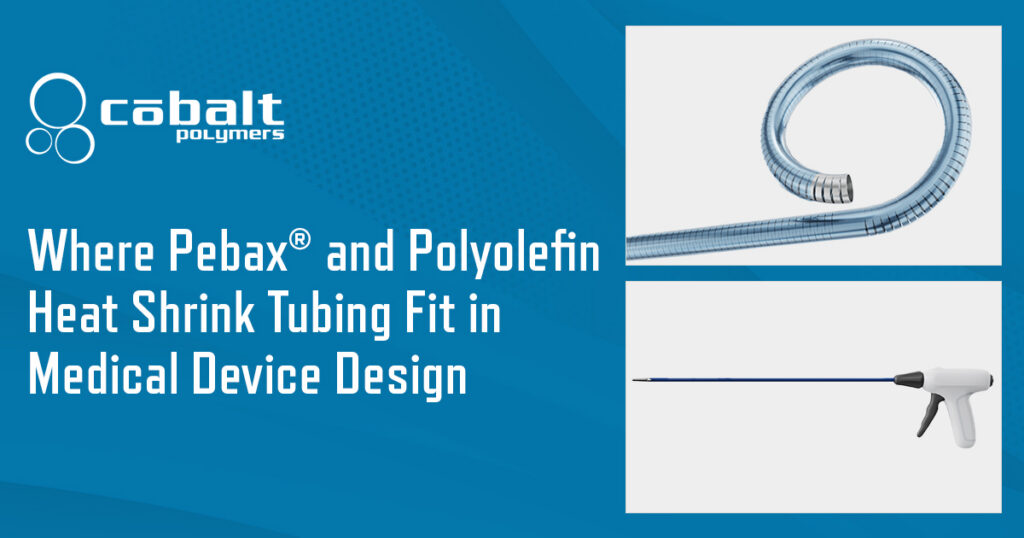
Heat shrink behavior can affect final device performance and assembly. In this sponsored technical blog post and full guide, Cobalt Polymers shares key considerations and use cases for selecting a material, shrink ratio, and wall thickness, including where Pebax® and Polyolefin Heat Shrink Tubing fit in medical device design.
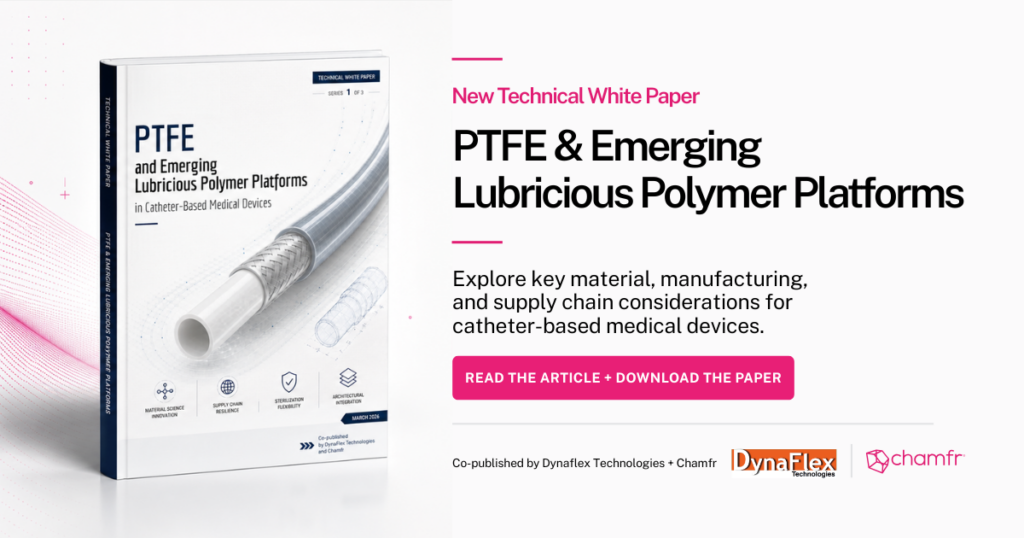
PTFE remains a foundational catheter liner material, but material selection is becoming more complex. Explore why MedTech R&D teams are evaluating PTFE through a broader lens across performance, supply chain resilience, sterilization, and regulatory planning.
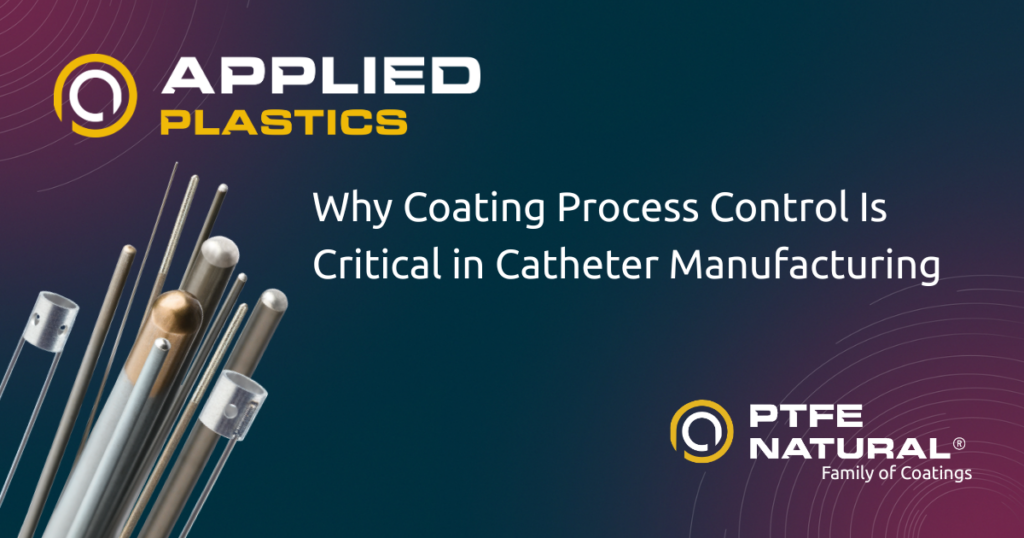
Variability in PTFE coating thickness can introduce fit issues, dimensional inconsistency, and performance variation across catheter builds. In this sponsored technical blog post, Applied Plastics explores how process control in coatings supports tighter tolerances, more consistent assembly, and reliable outcomes across catheter development.
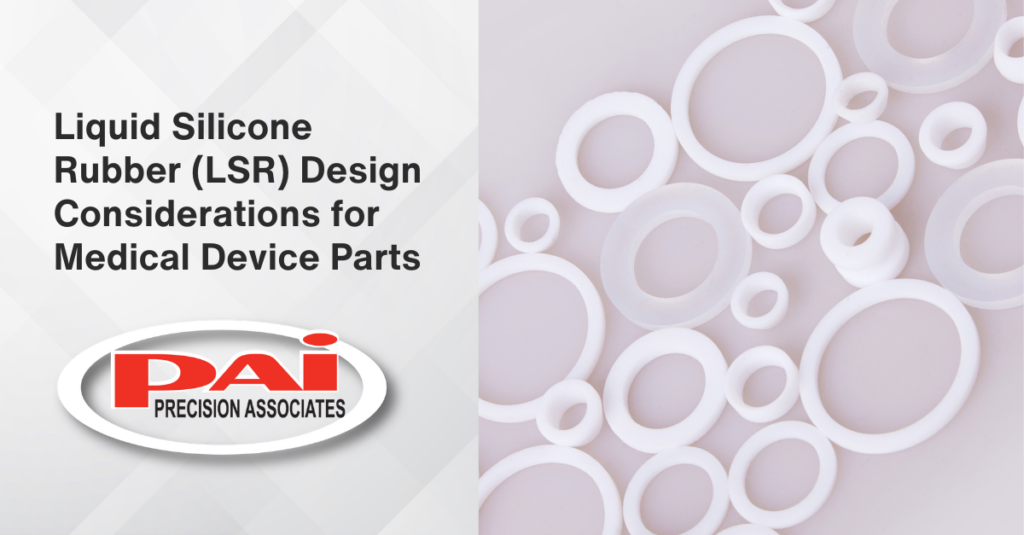
Early design decisions with Liquid Silicone Rubber (LSR) shape tooling complexity, validation risk, and long-term medical device performance. In this technical blog, Precision Associates, Inc. (PAI) shares practical design considerations for R&D teams to design for manufacturability earlier in the development process.

MedTech automation starts long before production. Explore what engineers are prioritizing in Design for Automation, from scalable molding and automated inspection to micro molding, OEE, and lights-out production planning.

As EP catheters become smaller, smarter, and more complex, R&D teams are rethinking energy delivery, electrode design, materials, automation, and system integration. Explore key innovations shaping the next generation of EP catheter development.